
Your EV battery will likely outlive the car it powers, even if the vehicle is scrapped
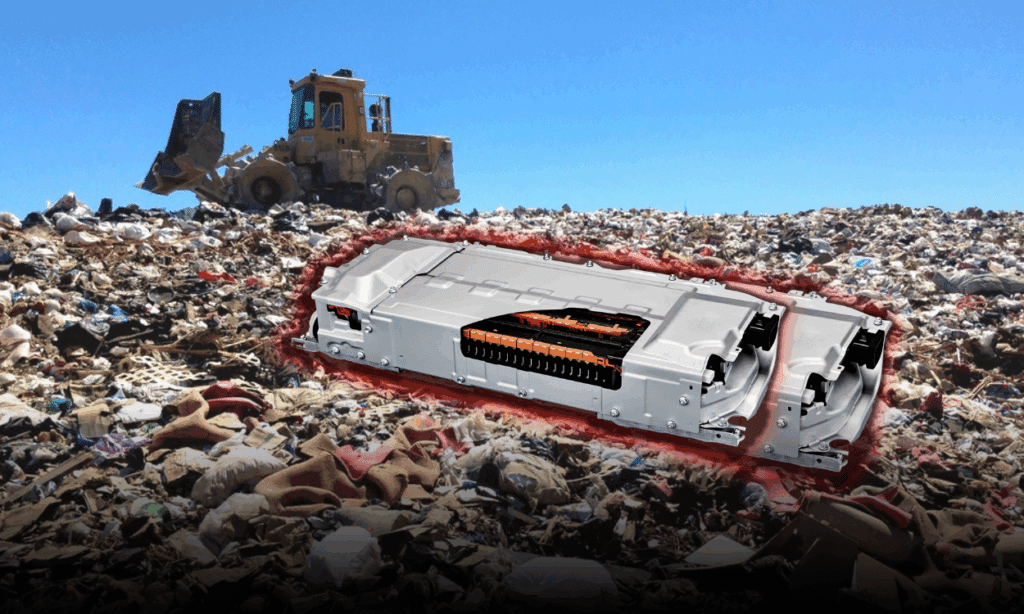
First off, these batteries aren’t short-lived. They’ve consistently shown they can easily outlast the average lifespan of a car. While some early designs had their kinks, manufacturers have largely ironed those out, making it straightforward to produce high-quality, durable battery packs.
Manufacturers also have strong incentives to ensure this longevity. In the U.S., for instance, EV batteries come with an eight-year, 100,000-mile warranty. Since replacing these batteries is incredibly expensive, car companies can’t afford frequent failures within that period. This pushes them to overbuild for longevity, which is a huge win for you, the consumer. In fact, studies and real-world examples consistently demonstrate their impressive durability:
Too Valuable to Waste: The Second Life
But there’s an even bigger reason why EV batteries won’t be heading to landfills: they’re simply too valuable. Even when a battery pack might no longer be optimal for the high-demand application of an electric vehicle (perhaps it’s at 70% of its original capacity), it’s still incredibly useful elsewhere.
Consider the innovative work of Australian engineer Francisco Shi, as highlighted by CleanTechnica. Shi is giving EV batteries a new lease on life by acquiring them from scrapyards and connecting them to a disused grid at an old industrial building. He uses the grid and solar panels to charge the batteries when energy is cheap or abundant, then sells that stored energy back during peak demand. It’s a win-win-win: Shi profits, Australia benefits from a smoothed-out power grid, and scrapyards gain a new revenue stream by selling these still-useful batteries.
Your EV battery can even serve as a backup power source for your home. Even if your car is scrapped or involved in an accident, the battery can still be repurposed for this kind of work.

Supporting a Greener Grid and Your Home
Imagine this system scaling up. As our capacity to produce solar panels and clean energy grows, we’re sometimes generating more power than the current grid, built for consistent energy sources, can handle. EV batteries are perfectly positioned to provide the essential storage needed to truly leverage renewable sources like solar and wind. This ultimately leads to lower electricity prices for everyone and significantly fewer carbon emissions.
Beyond grid-level benefits, having a battery at home is incredibly practical. It can act as a generator alternative during emergencies, providing crucial power when you need it most.
The Inevitable Path to Recycling
What if, in a rare scenario, an EV battery can’t find a second life? It still won’t end up in a landfill. The raw materials inside are far too valuable to simply discard. This is why a global battery recycling supply chain is rapidly developing. While it’s still maturing (largely because not enough batteries are being “retired” yet), countless businesses are actively working on perfecting the economics of large-scale automotive battery recycling.
The bottom line is that battery waste won’t become a significant problem. Batteries are valuable assets, and when society recognizes something’s value, it’s far less likely to be thrown away.