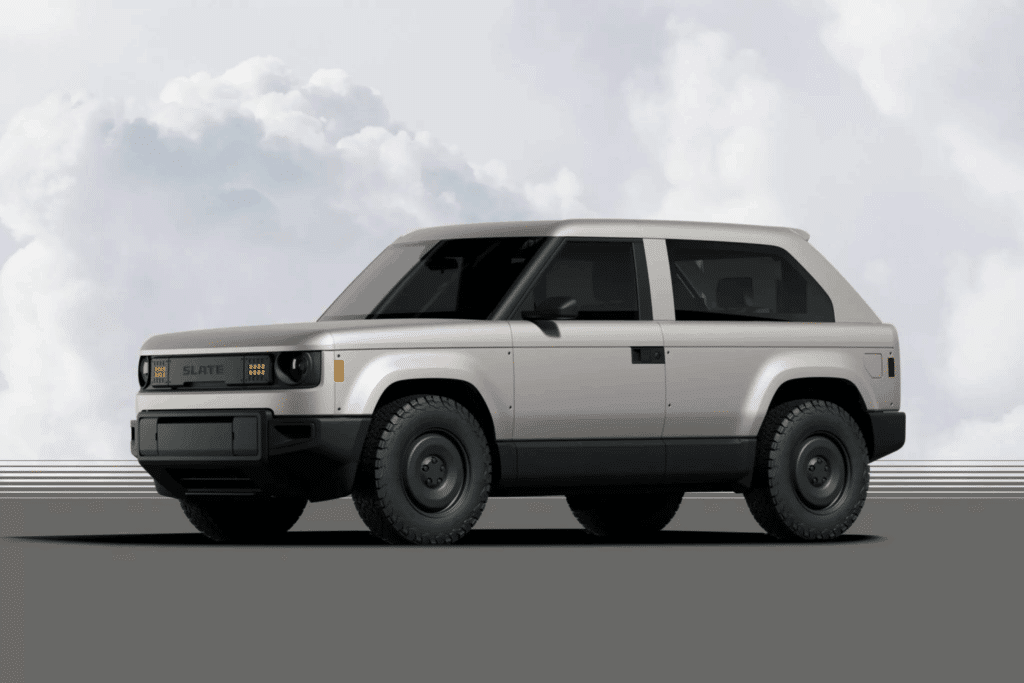
late’s enticing base price applies to a model that comes without an infotainment system or speakers

Creating an electric vehicle that’s affordable, customizable, and genuinely desirable has become the holy grail of the modern auto industry. Slate Auto—a startup in the EV space—has been generating serious buzz in recent months with bold claims that it can deliver just that.
But behind the viral videos and polished marketing, Slate’s offering is a stripped-down, back-to-basics machine that forgoes many modern conveniences—and may not end up being much cheaper than a Ford Maverick. According to one Stellantis executive, the company’s budget-friendly image might not hold up for long.
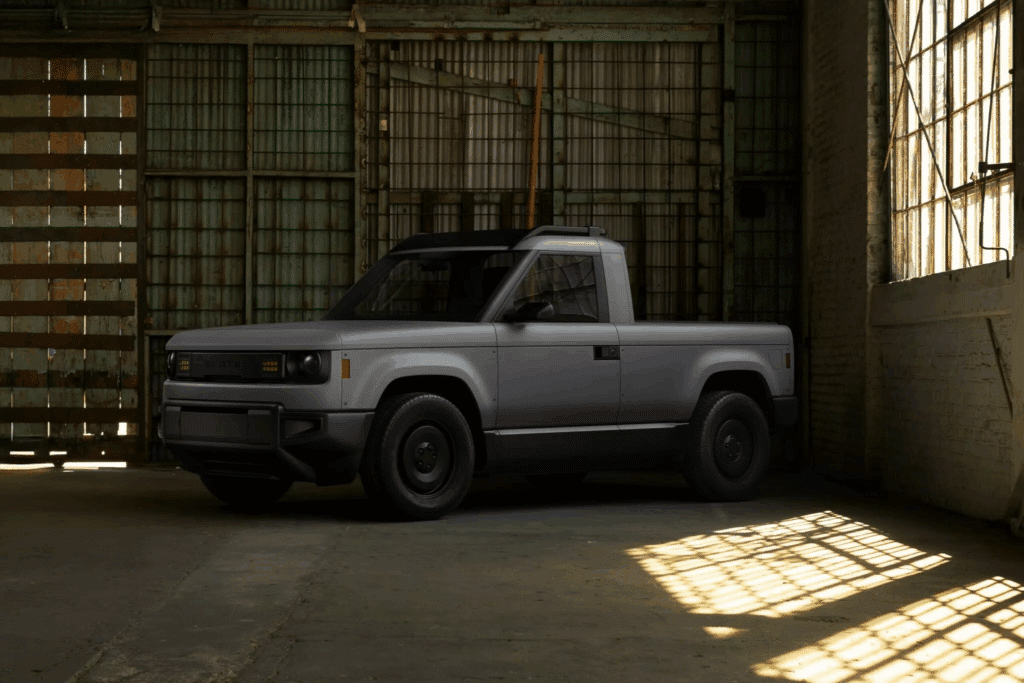
Slate’s debut vehicle, simply called The Truck, reflects its unconventional approach. All models leave the factory in identical form, and buyers customize them afterward. Want it to feel more like an SUV? Add the optional roof. Need speakers or an audio system? Check those boxes too. Everything from exterior wraps to tech add-ons is à la carte.
Slate claims a starting price below $28,000—or about $20,500 after applying the $7,500 federal EV tax credit. However, that incentive may soon vanish under the proposed One Big Beautiful Bill Act introduced during the Trump administration. Practically speaking, it could phase out as early as 2025 for automakers that surpass the 200,000-EV sales cap.
Stellantis Exec Sounds Off
Ram CEO Tim Kuniskis is skeptical that Slate’s truck will remain as affordable as advertised. “I think it’s super interesting,” he told CNBC. “The idea behind it—we’ve talked about it a million times. But what’s it actually going to sell for? Once customers start adding options, it won’t be $20,000 anymore. It’ll be $35,000, and now you’re in midsize truck territory.”
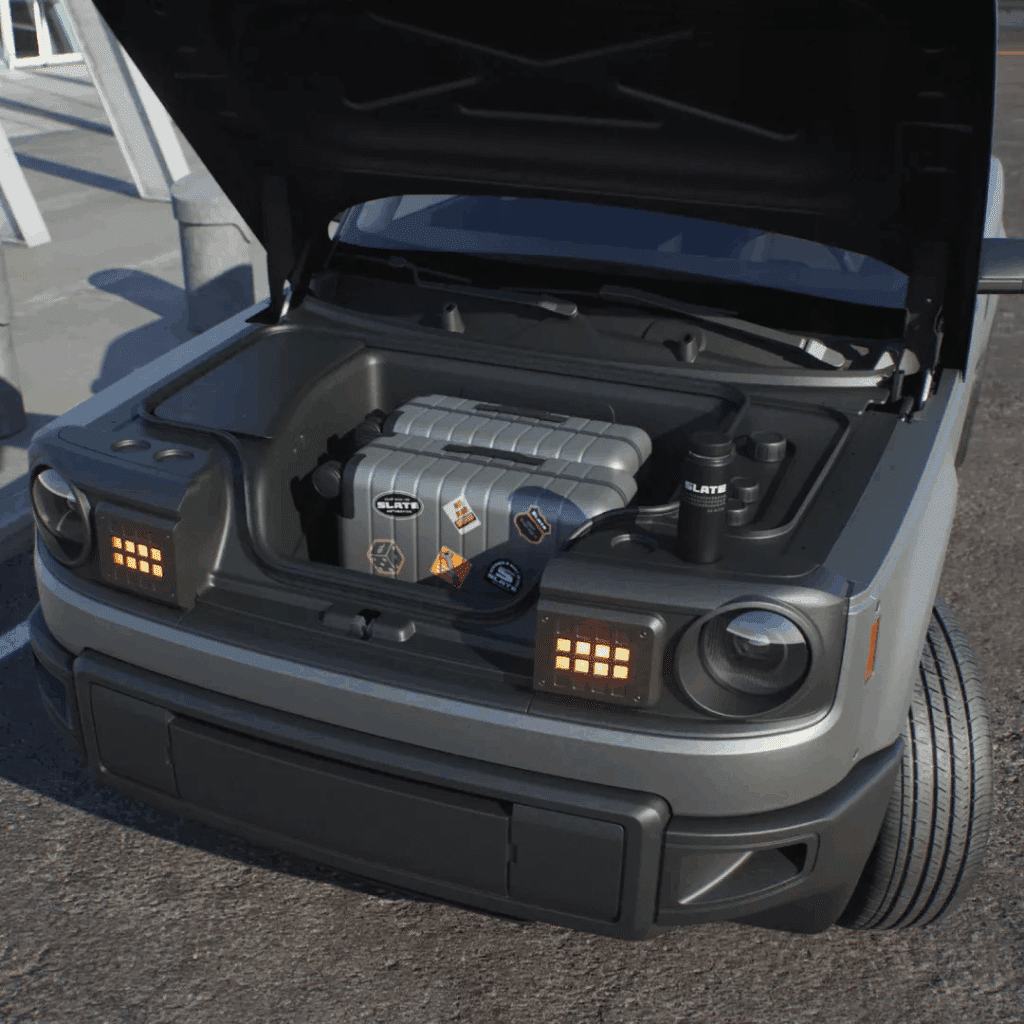
Kuniskis has a point. While the base price is enticing, Slate’s truck skips a lot of essentials. No infotainment system, no speakers, manual windows—it’s as bare-bones as modern vehicles get. Add just a few features, and the price climbs. Without the tax credit, the value proposition weakens even further.
The Real Challenge of Cheap EVs
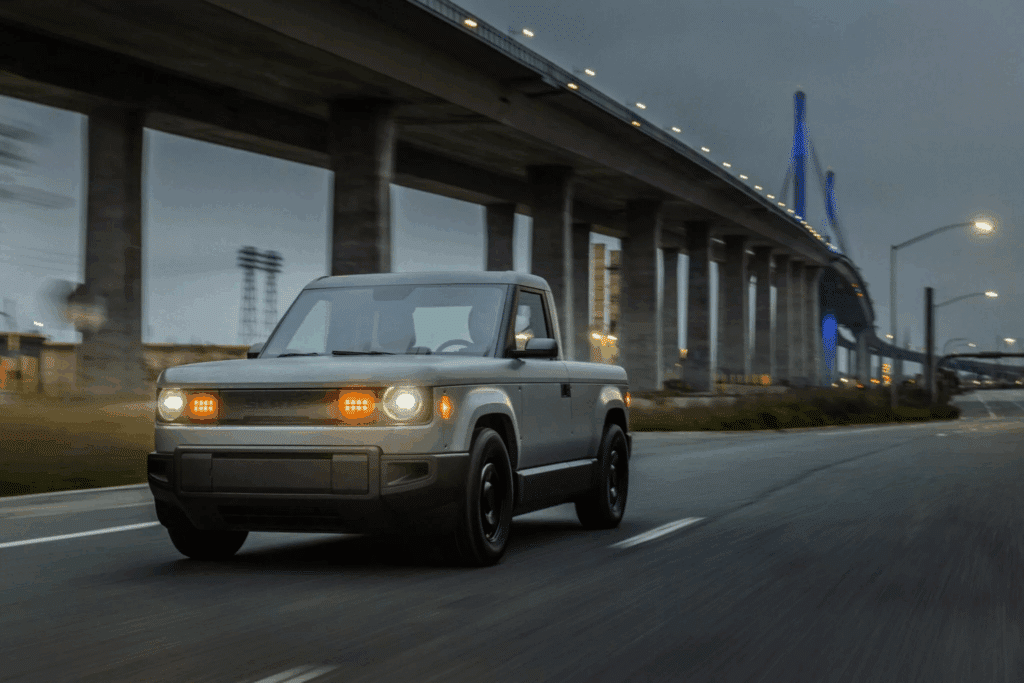
“Slate shows how incredibly difficult it is to build a truly affordable EV,” said Karl Brauer, executive analyst at iSeeCars, in an interview with CNBC. “This is a two-seater electric truck with a 140-mile range, no touchscreen, manual windows—and it still starts at $27,500. At that point, it’s not really competitive.”
For now, Slate is chasing an appealing vision: a customizable, minimalist EV at a low price. But unless it can keep costs down without relying on federal incentives, it may become yet another cautionary tale in the uphill battle to build an electric vehicle for the masses.