
Toyota’s latest hydrogen system boasts a 600,000-mile lifespan before major servicing is required
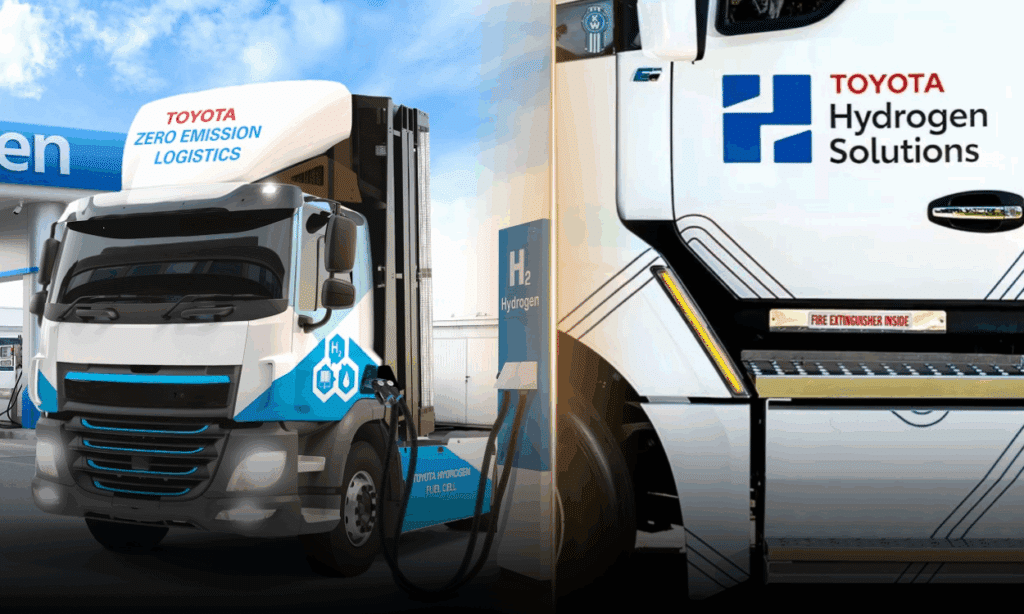
Despite hydrogen fuel cell cars not achieving the widespread adoption Toyota initially hoped for, the prominent automaker remains committed to the technology’s potential. This week, Toyota revealed its plans to introduce Class 8 heavy-duty trucks powered by hydrogen fuel cells in California. These trucks will support the operations of its significant parts distribution center within the state.
These hydrogen trucks have undergone testing through a pilot program and are now slated to begin operation on routes connecting the Port of Long Beach to Toyota’s North America Parts Center California (NAPCC) in Ontario, California, and extending down to San Diego. To facilitate the operation of this new fleet of environmentally conscious trucks, Toyota will also establish a new hydrogen fueling station at its parts center campus.
This new fueling station is a collaborative effort between Toyota, Air Liquide, and Iwatani. It is designed to offer faster refueling times compared to conventional hydrogen stations, aiming to match the efficiency of high-flow diesel pumps.
Speaking at the 2025 Advanced Clean Transportation Expo, Jordan Choby, Toyota Group’s vice president of Powertrain Engineering, stated that these new fuel cell-powered trucks will replace several diesel-powered vehicles currently utilized to support the North America Parts Center in California.
Choby emphasized Toyota’s belief in hydrogen as a fuel source, particularly through fuel cells, highlighting its potential for positive change. He affirmed the company’s investment in resources aimed at sustainable growth for both its operations and the broader value chain within the evolving transportation sector.

In addition to deploying a fleet of hydrogen heavy-duty trucks, Toyota has also dedicated resources to enhancing its hydrogen powertrains. Earlier this year, the company announced the development of a third-generation heavy-duty truck powertrain. This new system reportedly offers twice the durability, a 20% improvement in fuel efficiency, and significant reductions in cost. Notably, this advanced powertrain is designed to operate for 600,000 miles or 1 million kilometers without requiring major servicing.
Looking towards the future, Toyota anticipates that this new powertrain will be ready for the U.S. market in 2027 or later. It will play a crucial role in Toyota’s overarching strategy to decarbonize its supply chain and further integrate hydrogen technology into its logistics operations.
While the consumer market for hydrogen fuel cell passenger cars may not yet be robust, Toyota appears confident that hydrogen’s time is approaching within the realm of heavy-duty transportation.