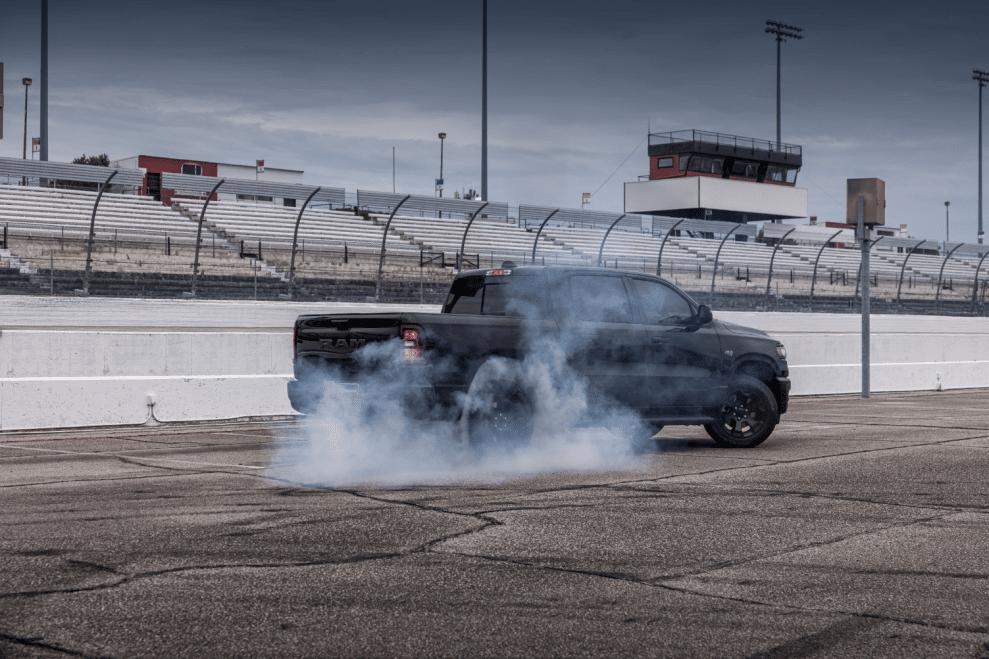
V8 fans may be the loudest, but the numbers clearly favor six-cylinders—and it’s not even close.

America’s Favorite Truck Engine Isn’t What You Think Anymore
We all know America’s favorites. Baseball? Of course. Pie? Apple, naturally. And for truck engines? Well, it turns out we’re big fans of the V6.
That last part might’ve made you flinch—and that was the point. Not because it’s clickbait, but because it’s true.
Just as Ram announced the return of its Hemi V8 last week, I dug into the numbers to find out which engine configuration full-size truck buyers in the U.S. actually prefer. After speaking with automakers, analysts, and industry insiders, the answer was clear: six-cylinders are leading the pack.
So, what changed?
It starts with what manufacturers are offering. Toyota axed the V8 from the Tundra lineup altogether, replacing it with a twin-turbo V6 (with or without hybrid assist). Until Ram’s recent reversal, it had also dropped the Hemi V8 in favor of its 3.0-liter Hurricane inline-six. Since Hemi production won’t begin for a few more months, two of the segment’s biggest players currently don’t offer a V8 at all.
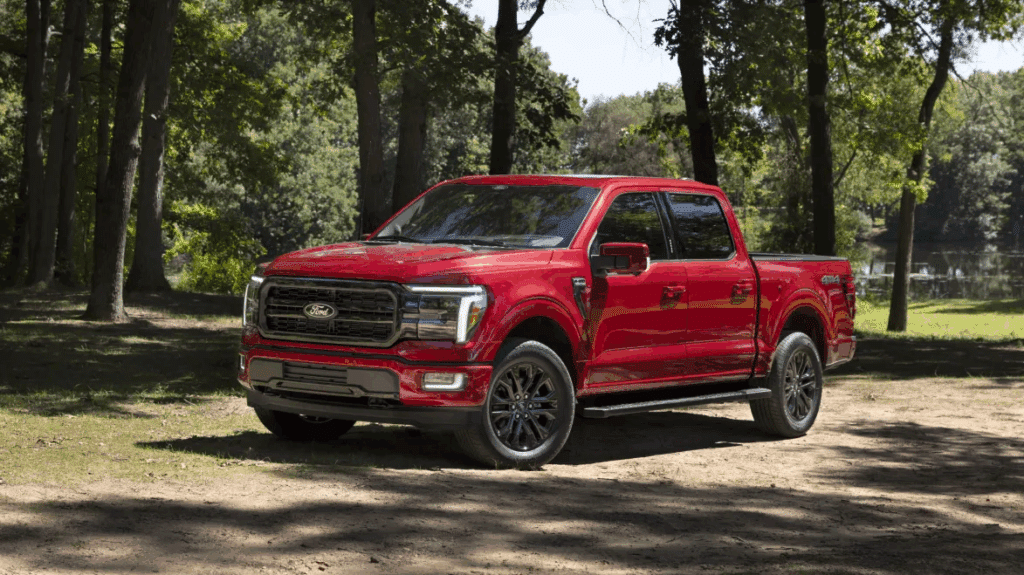
Then there’s Ford. While the company has continuously sold V8-powered pickups since 1935, it’s been pushing its EcoBoost V6s as the premium option for over a decade. And with good reason: the 3.5-liter EcoBoost makes 400 horsepower—the same as Ford’s 5.0-liter V8—but with 500 lb-ft of torque, a 90 lb-ft advantage. Ford also offers a hybrid PowerBoost version of the 3.5-liter and a smaller 2.7-liter twin-turbo V6. Ford told me each of its F-150 engine options accounts for roughly a third of sales—which means the V6s, combined, significantly outsell the V8.
General Motors, meanwhile, remains the most V8-heavy player in the space, offering both a 5.3-liter and 6.2-liter across its half-ton lineup. Those two engines power about half of all Silverado 1500s (42% and 8%, respectively). GM also sells a 3.0-liter Duramax inline-six diesel, but its highest-volume non-V8 is actually the 2.7-liter TurboMax four-cylinder, which makes up 36% of sales.
According to Stephanie Brinley, principal automotive analyst at S&P Global Mobility, the shift has been dramatic. In 2020, V8s accounted for 64.6% of U.S. half-ton truck registrations. By 2024, that dropped to 38%. Six-cylinder trucks jumped from 32.8% to 47.6% over the same period. Even GM’s four-cylinder trucks grabbed 11.5% of the market in 2024.
“The V6 and four-cylinder engines today are stronger than they used to be,” Brinley said. “The Ram 1500 is a great example—its Hurricane engines are more efficient and more powerful than the old 5.7-liter Hemi.”
She’s not wrong. The Hemi made 395 hp and 410 lb-ft of torque. The standard-output Hurricane? 420 hp and 469 lb-ft. The high-output version? A whopping 540 hp and 521 lb-ft. In terms of performance, it’s not even close.
Still, a significant portion of truck buyers remain loyal to the V8. In 2024, V8s made up 38% of the segment—roughly 530,000 registered trucks. That’s not nothing, and it’s why experts believe offering multiple powertrain options remains key.

“The V8 take rate will likely continue to decline over time,” Brinley said. “But for now, there are still enough buyers demanding one—especially for high-volume brands based in Detroit. Ram learned the hard way that removing the V8 entirely can drive customers to the competition.”
And that’s likely why Ford hasn’t cut its V8 option, despite being an early adopter of turbocharged sixes. Truck buyers value choice—and brand loyalty runs deep in this segment. Lose a customer, and it’s hard to win them back.
“Dropping the V8 from the 1500 was a mistake, and Ram’s likely lost customers to GM and Ford as a result,” said Robby DeGraff, manager of product and consumer insights at AutoPacific. “It’s smart to bring the Hemi back. Powertrain variety is essential. If you take away choice, your profits suffer.”
Ram CEO Tim Kuniskis admitted as much when announcing the Hemi’s return: “Everyone makes mistakes, but how you handle it defines you. Ram screwed up when we dropped the Hemi. We own it—and we fixed it.”
Kuniskis expects the new Hemi to start slow, making up 20–25% of Ram 1500 sales at launch, with potential to hit 40% later.
Still, don’t expect a full-blown V8 comeback. “I don’t think the Hemi’s return will significantly shift the overall market,” said Sam Abuelsamid, VP of market research at Telemetry Agency. “Other automakers aren’t likely to change their strategies.”
The truth is, manufacturers have poured huge investments into V6 technology—and emissions rules aren’t getting any looser. Whether or not V8s have reached their limits, V6s are already strong enough to do the job while offering better efficiency and emissions performance. And while there’s still a vocal group of buyers who love the simplicity of a V8, most truck shoppers today simply don’t care what’s under the hood—so long as it gets the job done.
And that’s what automakers will keep building.